In the realm of storytelling, tall tales have a distinctive charm. They blend humor, larger-than-life characters, and remarkable situations to entertain us and, often, to teach us moral lessons. With exaggerated scenarios and characters who defy the bounds of reality, tall tales let us escape the ordinary, venturing into worlds where anything is possible.
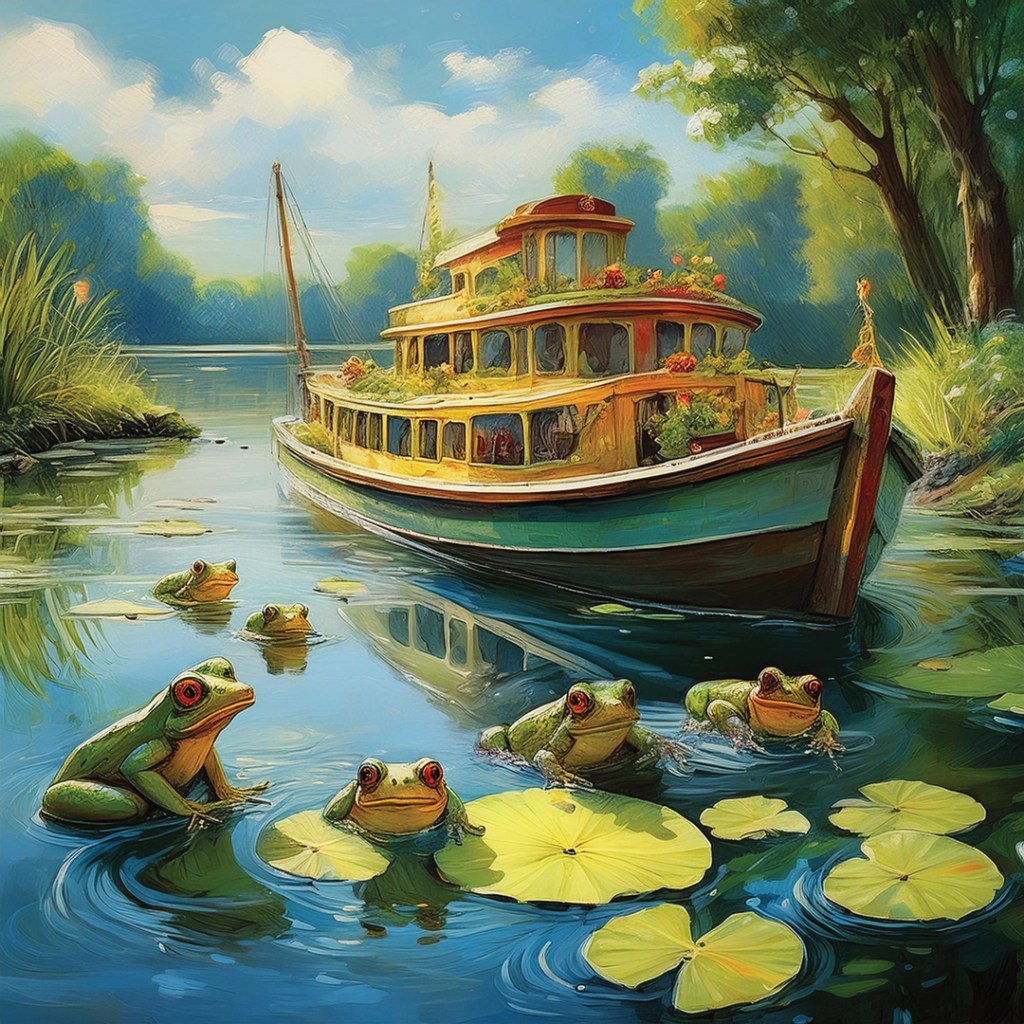
When I was a child, my grandfather shared a memorable tale he had written about a riverboat powered not by steam or paddles, but by frogs jumping on the paddle wheel. He painted a vivid picture of dozens of frogs in tiny harnesses and leashes, tethered to the boat’s frame, bouncing in unison to propel the wheel through the water. I always imagined the frog-powered system working quite well—unless, of course, too many of the frogs were eaten by an alligator. Then, I supposed, the boat crew would need to stop and round up more frogs to continue their journey. While I never read the full story, the concept stayed with me, leading me to wonder: what exactly makes a story like this one a “tall tale”?
Origins of Tall Tales: The American Campfire Legacy
Tall tales originated as part of America’s oral storytelling tradition, a way for pioneers to pass the time, share a laugh, and bond. Life on the frontier was difficult and often dangerous, and tall tales offered a way to inject humor and wonder into daily hardships. Stories were told around campfires, in bunkhouses, or at bedtime, and later, these tales made their way into written form, allowing them to be preserved for future generations. In their written forms, tall tales became iconic parts of American folklore, inspiring readers with their spirited, imaginative storytelling and larger-than-life heroes.
Defining Features of a Tall Tale
To qualify as “tall,” a tale must have several key ingredients that distinguish it from ordinary stories. These elements help transform an otherwise simple narrative into an unforgettable adventure, filled with humor, absurdity, and occasional wisdom.
1. Believable Absurdity
Tall tales are always told as if they are true, creating a fascinating paradox where the audience understands the impossibility of the story but buys into it nonetheless. A tall tale suspends the listener between reality and absurdity, compelling them to momentarily accept the impossible. Consider the story of Pecos Bill, the legendary cowboy who lassoed a tornado. According to the tale, Bill was raised by coyotes after falling out of his family’s wagon as a baby, eventually growing up to tame rattlesnakes (even use one as a lasso) and ride wild hurricanes. Although each element is clearly improbable, the tale is told with such conviction that the listener is drawn in, playing along with the impossible.
Similarly, the story of the riverboat frogs follows this pattern. While the idea of frogs propelling a boat is absurd, it’s told in such a straightforward way that the audience might find themselves entertained by the image of tiny frogs, hard at work in harnesses, without questioning the absurdity.
2. Humor and Larger-Than-Life Characters
At the heart of every tall tale is humor and an exaggerated character with a personality or abilities beyond what’s humanly possible. These tales offered a much-needed reprieve from pioneer hardships, injecting levity into otherwise grueling lives. Humor in tall tales comes from the ridiculousness of the situations, the outlandish details, or the hero’s absurdly exaggerated characteristics.
Take Paul Bunyan, the giant lumberjack, as an example. His camp stove is supposedly so enormous that cooks had to use entire slabs of bacon as skates to grease the griddle. The idea of cooks skating on bacon to prepare breakfast is both amusing and a testament to Bunyan’s larger-than-life nature. Through these details, tall tales use humor to break the bounds of reality and create memorable images that linger in the imagination.
3. Problems, Solutions, and Underlying Lessons
Most tall tales revolve around a problem or challenge that the hero must overcome, often in creative and outrageous ways. This structure provides a foundation for the story’s action and can carry subtle moral messages or themes that resonate with listeners. The characters’ responses to these problems often reflect qualities like perseverance, cleverness, and resilience.
In the case of John Henry, the steel-driving man, his story is one of human determination as he competes against a machine. Pecos Bill, on the other hand, confronts the untamed American West, embodying the rugged individualism and perseverance that were so admired on the frontier. The riverboat frogs might face the challenge of avoiding alligators or simply keeping their momentum, demonstrating resourcefulness and teamwork. Through these dilemmas and their creative resolutions, tall tales remind us of the importance of resilience and ingenuity in the face of adversity.
4. Magical Realism and Unreliable Narrators
Tall tales often incorporate magical realism, presenting fantastical elements within a realistic setting to create a sense of wonder. Paul Bunyan may be a lumberjack, but he is also a giant capable of reshaping the landscape with his bare hands. Pecos Bill is such a skilled cowboy that he can lasso a cyclone, while John Henry is strong enough to outpace a steam-powered machine. These elements blur the line between fantasy and reality, encouraging listeners to imagine the impossible.
Tall tales also rely on the voice of an unreliable narrator—someone whose perspective or storytelling style may be exaggerated, or who relishes adding embellishments with each retelling. Because these stories were originally shared orally, the details often shifted depending on who was telling the story and how much the teller wanted to entertain. Like the boy who cried wolf, these narrators aren’t wholly deceptive, but they encourage listeners to take the story with a grain of salt, adding a layer of suspense and humor.
5. Timeless Appeal and Cultural Reflection
Part of the lasting charm of tall tales is that they encapsulate the hopes, fears, and humor of the cultures they came from. Tall tales serve as reflections of the values and aspirations of early American pioneers, celebrating strength, courage, and wit. These stories encapsulate an idealized version of the American frontier spirit—an image of larger-than-life heroes confronting challenges and blazing trails across untamed landscapes.
The stories have evolved over time, yet they continue to resonate because of their universal themes. The struggles of the heroes may be exaggerated, but they mirror the real challenges people face and the resilience required to overcome them. In this way, tall tales capture not only a piece of history but also a sense of enduring human qualities.
The Power to Enchant and Inspire
The story of the riverboat frogs—and other tales like it—illustrates the enduring appeal of tall tales. These stories combine humor, adventure, and moral lessons with an imaginative spark that transports us to a world where anything is possible. They allow us to laugh at life’s absurdities, marvel at characters who defy logic, and, ultimately, see a reflection of human resilience and creativity.
As we explore the art of the tall tale, we find more than just fanciful stories; we discover a storytelling tradition that celebrates the extraordinary in everyday life. These tales remind us that, sometimes, it’s the wildest, most imaginative stories that offer the deepest insights into the human spirit.
 CRAFTING VISUAL NARRATIVES THAT INSPIRE